2026-09-15 ·
How Soil Type Affects Tree Health in El Monte, CA
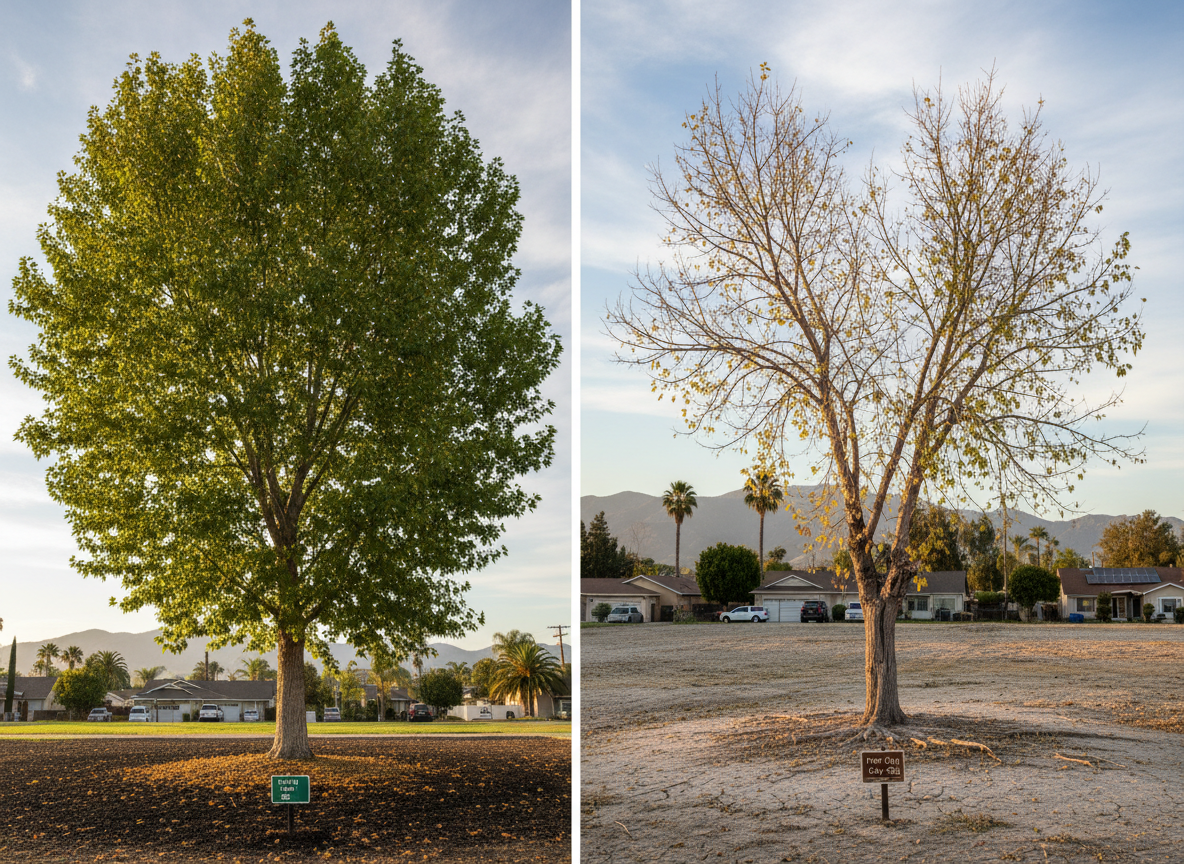
In El Monte's warm Mediterranean climate with hot summers and mild winters, soil type affects tree health mainly through drainage speed and nutrient holding capacity, where heavy clay soils near Downtown El Monte often restrict oxygen to roots and shorten tree lifespan by several years compared to better-drained spots in North El Monte.
Common Soil Types Around El Monte
El Monte sits on alluvial deposits from the San Gabriel River that create a mix of clay-loam and sandy loam soils. In South El Monte and near El Monte City Hall, finer clays dominate and hold water longer after winter rains. Near Arroyo High and in parts of North El Monte, older residential lots from the 1950s and 1960s often show compacted layers from construction traffic. These compacted zones sit just below the surface and block root expansion even when surface soil looks workable. Baldwin Park and West Covina share similar alluvial patterns, so crews see the same drainage issues when moving between cities.
How Soil Affects Root Growth and Water Access
Clay soils common around Legg Lake and the El Monte Historical Museum area drain slowly, so roots stay shallow and become vulnerable during the first heat wave after a wet winter. Sandy pockets found closer to Arcadia allow faster drainage but lose nutrients quickly, forcing trees to expend energy searching for food instead of building strong trunks. In older neighborhoods with small lots, underground utilities and driveways further limit root spread, making even mild compaction problems turn into stability issues. Mild winters keep soil temperatures high enough for roots to stay active, yet summer heat dries surface layers fast and stresses trees planted in heavy clay.
Climate and Seasonal Soil Changes
Hot summers in Los Angeles County pull moisture from clay soils faster than roots can pull it, creating cracks that later fill with water during rare storms and cause oxygen loss. Mild winters allow continued microbial activity that can tie up nitrogen in poorly aerated spots. Homeowners in South El Monte often notice yellowing leaves on established trees by late August because compacted clay prevents deep water from reaching feeder roots. In contrast, properties near West Covina with sandier soils show earlier wilting but recover faster once deep watering reaches the root zone.
Practical Steps to Support Trees in Local Soils
Test soil texture by squeezing a moist handful; if it forms a tight ball that won't crumble, aeration helps break compaction. Adding organic matter in thin layers over several seasons improves structure without disturbing established roots. For trees showing decline, deep root fertilization places nutrients below the compacted layer where roots can actually use them. Tree soil aeration combined with tree fertilization often restores vigor in clay-heavy yards around Downtown El Monte. Readers facing widespread stress may also want to review Protecting Your Landscape: Tree Disease Identification in El Monte, CA to rule out secondary issues that mimic soil problems.